Antimicrobial Fabrics
Medical Bedding: Anatomy of a Mattress
Mattresses come in three types: innerspring, foam and polyester, and air-supported. Medical mattresses contribute more than patient care.
Medical privacy curtains might seem minor, but when specified correctly, they significantly contribute to safer, more efficient, and more comfortable healthcare environments.
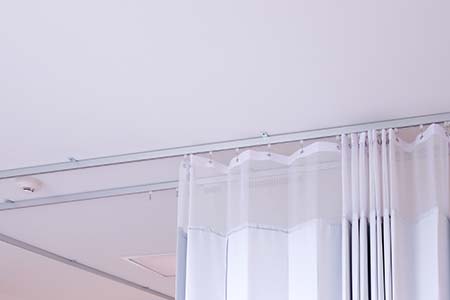
Modern healthcare environments depend on a complex ecosystem of advanced medical devices, infrastructure, and specialized materials. Among these essential components, medical privacy curtains remain one of the most frequently used—yet often overlooked—tools for supporting patient safety, infection control, and regulatory compliance.
While they may appear simple, healthcare curtains are highly engineered textile systems designed to meet strict fire safety standards, support infection prevention protocols, and withstand demanding cleaning regimens. Selecting the proper medical curtain fabric requires careful evaluation of performance characteristics, regulatory requirements, and long-term durability.
Healthcare privacy curtains must comply with NFPA 701, the industry standard for flame propagation resistance in textile materials. This test evaluates how fabrics respond to ignition sources and ensures that materials self-extinguish once the flame source is removed.
Many medical curtains are also constructed with high-strength polyester mesh headers. These mesh panels serve a critical safety function by allowing water from overhead sprinkler systems to penetrate the curtain during fire suppression events, helping ensure proper sprinkler effectiveness and code compliance.
Infection prevention is one of the most crucial factors in selecting healthcare textiles. Privacy curtains are high-touch surfaces and can serve as vectors for pathogen transmission if not properly selected and maintained.
Advanced medical fabrics often incorporate integrated antimicrobial technologies to inhibit bacterial growth on their surfaces. These technologies typically utilize controlled-release antimicrobial systems embedded directly into the fabric, rather than surface-applied treatments that may degrade over time.
This protection can help reduce the risk of Hospital-Acquired Infections (HAIs) caused by pathogens such as MRSA (Methicillin-resistant Staphylococcus aureus). While antimicrobial curtains are not a substitute for proper cleaning protocols, they serve as an additional layer of environmental protection within infection control strategies.
Healthcare fabrics must be engineered to withstand frequent cleaning with hospital-grade disinfectants, including quaternary ammonium compounds, bleach solutions, and alcohol-based cleaners. Materials with non-porous or coated surfaces allow contaminants to remain on the surface rather than penetrate the textile structure, making them easier to disinfect.
Fabrics designed for in-place cleaning can significantly reduce maintenance costs and operational disruption while supporting infection control initiatives. Additional performance benefits often include resistance to staining from common medical contaminants such as iodine, bodily fluids, and oils.
Durability is another major consideration in healthcare environments where curtains are frequently handled, moved, and laundered. High-performance medical fabrics are typically engineered with reinforced scrim constructions or advanced polymer materials to improve:
These features contribute to extended product lifecycles and lower total cost of ownership compared to conventional textile curtains.
In addition to technical performance, healthcare fabrics also play an important role in patient experience. Research has shown that thoughtfully designed healthcare environments can positively influence patient comfort and satisfaction.
Modern medical curtain fabrics are available in a wide range of colors, textures, and patterns, allowing healthcare facilities to balance clinical performance with hospitality-inspired design aesthetics.
Herculite manufactures Sure-Chek brand high-performance healthcare fabrics designed to meet the demanding requirements of modern medical environments. Sure-Chek® Linen products combine regulatory compliance with advanced material engineering to deliver durable, easy-to-maintain privacy curtain solutions.
These fabrics are engineered to meet NFPA 701 fire safety requirements while also providing antimicrobial protection, chemical resistance, and long-term durability.
Sure-Chek® fabrics are engineered to resist ignition and self-extinguish when flame exposure is removed. Their specialized surface formulation also enables the removal of most oils, greases, and common healthcare contaminants with mild cleaning agents. Curtains can typically be cleaned without removal, helping maintain appearance and reduce replacement frequency.
Sure-Chek fabrics’ integrated antimicrobial protection helps prevent the development of bacteria-related odors by inhibiting the growth of odor-causing microbes on the fabric surface. This built-in defense supports a cleaner, more pleasant patient environment between routine cleanings, helping facilities maintain higher perceived cleanliness standards, improve patient and staff comfort, and enhance the overall quality of the care space.
Sure-Chek fabrics utilize a controlled-release antimicrobial system that continuously protects the fabric surface throughout its service life. Because this protection is built into the material itself, it does not wear off like topical treatments.
The fabrics are also engineered for demanding healthcare use, offering exceptional tear strength and resistance to mechanical wear. This durability helps extend curtain replacement cycles and reduce operational costs.
Sure-Chek fabrics are available in multiple color options with:
These options allow healthcare facilities to standardize specifications while maintaining design flexibility.
The next time you enter a healthcare facility, take a closer look at the privacy curtains surrounding patient spaces. Behind their simple appearance is a sophisticated material engineered to meet strict safety standards, support infection control efforts, and enhance the healthcare environment.
Medical privacy curtains may seem like a small detail, but when properly specified, they play a significant role in creating safer, more efficient, and more comfortable healthcare spaces.

Mattresses come in three types: innerspring, foam and polyester, and air-supported. Medical mattresses contribute more than patient care.
A pressure management mattress is a specialized device which redistributes pressure across the body in order to mitigate issues for bedridden...
Bedsores are caused by prolonged pressure on the skin and are more easily prevented than they are treated.